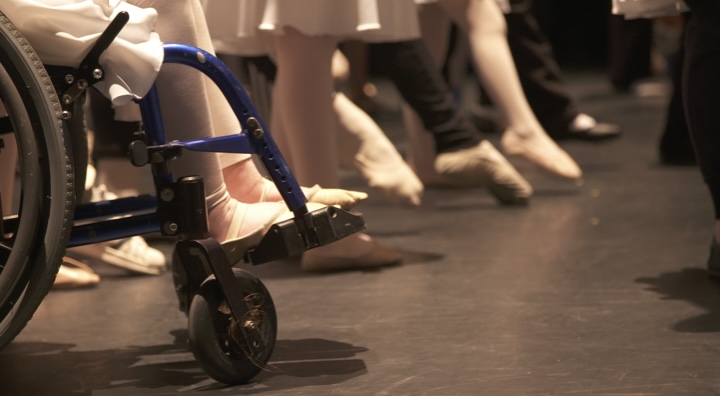
Your core, your essence, your spirit just shines through everything when you dance, from your fingertips to your eyes to your smile. That’s the spirit of dance.
Bonnie Schlachte, Founding Director of Ballet for All Kids, a cooperative ballet studio
This week, I invite you to take a break from whatever series you’re bingeing and check out this film: Everybody Dance. I promise you it will be worth it.
Everybody Dance is a documentary directed by Dan Watt, which follows a ballet studio preparing for its next recital. What makes this studio and its recital special is the fact that most of the kids dancing are disabled or have special needs. Throughout the film, we meet individual dancers between the ages of 5 and 19 and learn more about their specific stories and how dance has changed their lives for the better.

We also get to meet Bonnie Schlachte, the Founding Director of this studio, Ballet for All Kids. She opened the studio in 2008 after realizing with much research that there was nothing available for special needs kids who wanted to dance. A typical dance studio was just not set up to make dance accessible to kids who used walking aids or wheelchairs or who had cerebral palsy or autism. She used her degree in psychology, her own experience dancing ballet for 13 years, and her work with hundreds of therapists in various fields to develop the Schlachte Method, which uses a variety of teaching methods to make learning ballet possible for any child regardless of their abilities or disabilities.
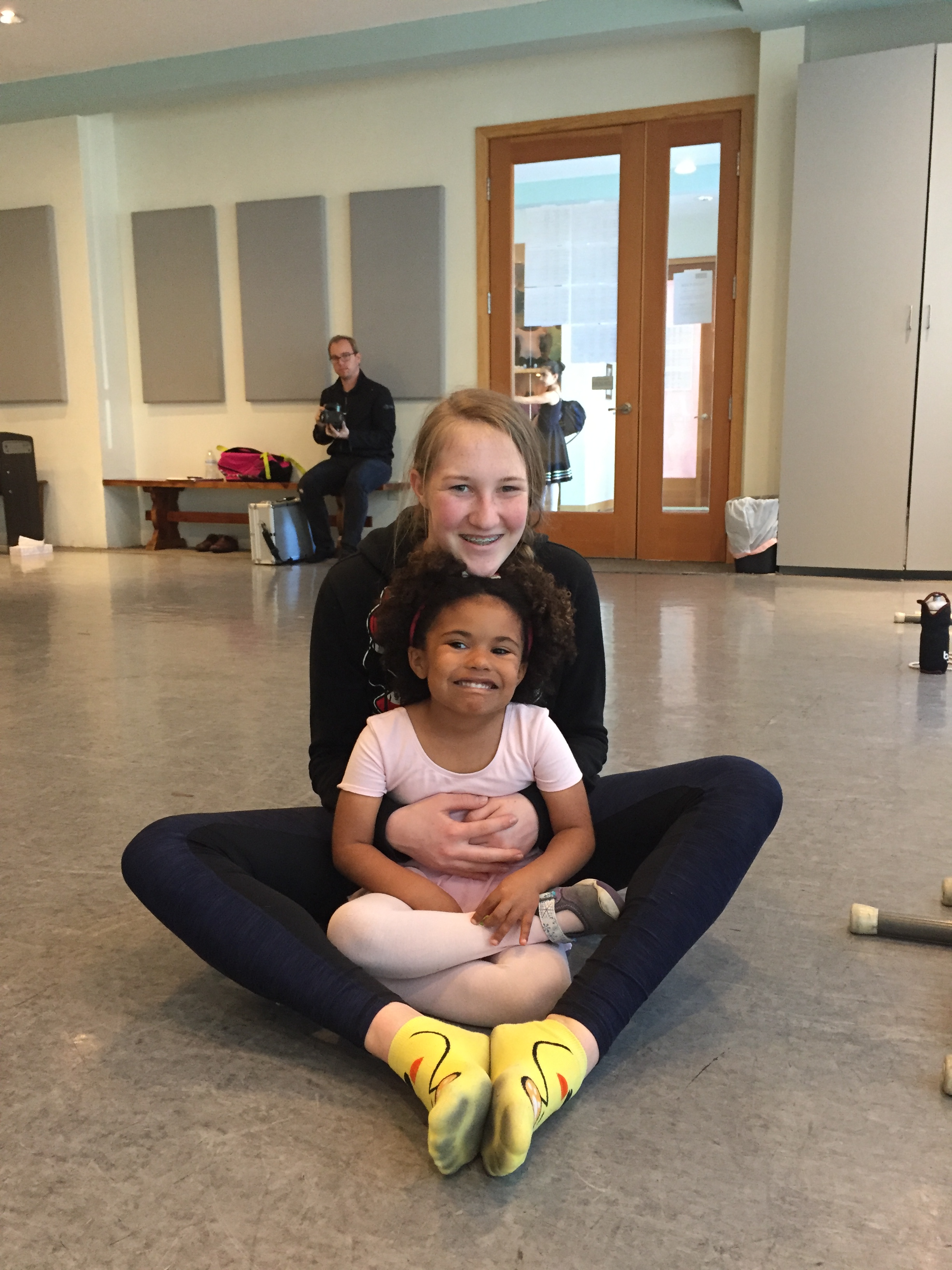
Following this method, classes at Ballet for All Kids are taught in multiple ways including auditorily, visually, and kinesthetically using props. Bonnie applies behavioral theory to help her students with social behavior challenges, such as giving stickers for good behavior in class that can be redeemed for a reward or using squares taped on the floor to provide boundaries and create a safe space where the kids can practice self control while at the same time learning the body directions that apply to different ballet movements. Ballet for All Kids also uses volunteers, mainly out of high school and college, who dance with and assist the kids both in class and in the recital.
Bonnie emphasizes that her studio is not a disabled studio. About a third of her students are physically and neurologically typical, and one of her goals was to create a space where if you observed a class, you wouldn’t be able to tell the difference between dancers because everyone in the class is doing the same thing – learning ballet.


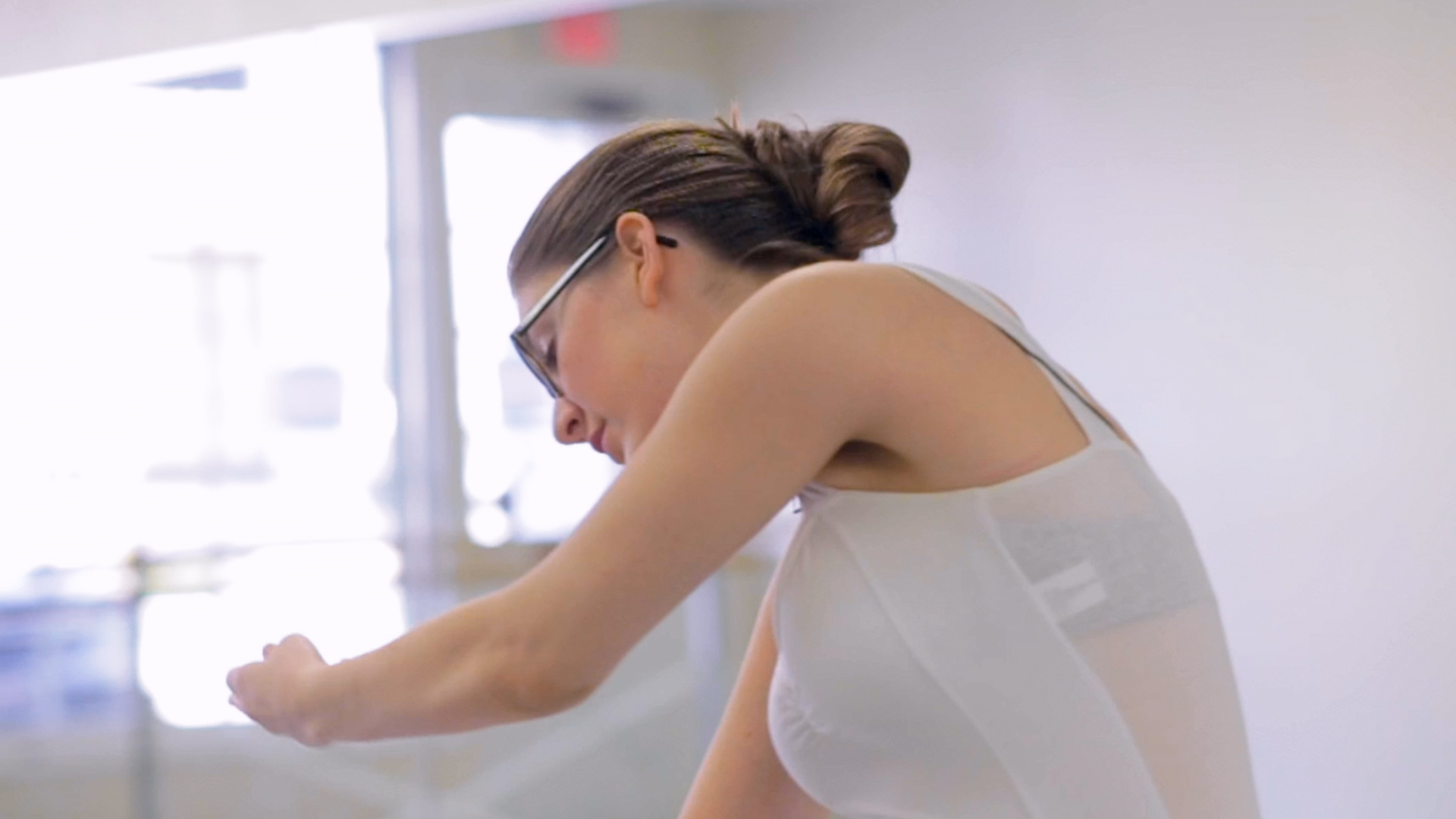
A beautiful thing about what Bonnie has created with Ballet for All Kids is it’s repeatable. Just by creating a few more access points, by taking into account how different kids learn in different ways, the benefits of dance are opened up to so many more.
Those benefits include the experience of performing in a real dance recital. The students of Ballet for All Kids perform in a real theater with professional lighting, sound, costumes, etc., just like the students of any other dance studio would. The recital is a key part of a child’s dance journey, and so it was never a question for Bonnie as to whether her studio would put on recitals. She also knew that the sense of accomplishment from performing gives a huge boost to a child’s self-confidence and self-esteem, and that would be especially important for her student base.
The world is full of inequities that most people remain largely unaware of, except for those whose lives are made that much more difficult because of them. A few steps leading up to a building’s entrance seem like nothing, except to those who get around in a wheelchair. A touchscreen in an elevator may feel like an upgrade from physical buttons, except to those who are blind or live with severe vision impairments and rely on the braille stamped on those buttons to select their floor. Teaching dance using only the most common method works fine for those who learn best via that method, but it excludes everyone else.
Ballet for All Kids is proof that even a technically challenging dance style like ballet can be made accessible to anyone, and all it takes is opening up a few more access points. Dance at its core reaches beyond the physical flesh and touches the soul. Anyone can listen to music and move. How they move may be different, but the magic that appears when music and movement join together is accessible to everyone.
Everybody Dance is available to watch for free on Amazon’s Freevee service and Tubi. I encourage you to go watch it now!

 The Girl with the Tree Tattoo
This documentary really hit home for me. I have dyspraxia and have danced on and off my entire life. About five years ago I discovered ballroom and it’s there that I seem to have found my space. Thank you for the reccomendation!
LikeLiked by 1 person
Thank you for sharing, and I’m glad you found your space in ballroom! ❤️
LikeLike